
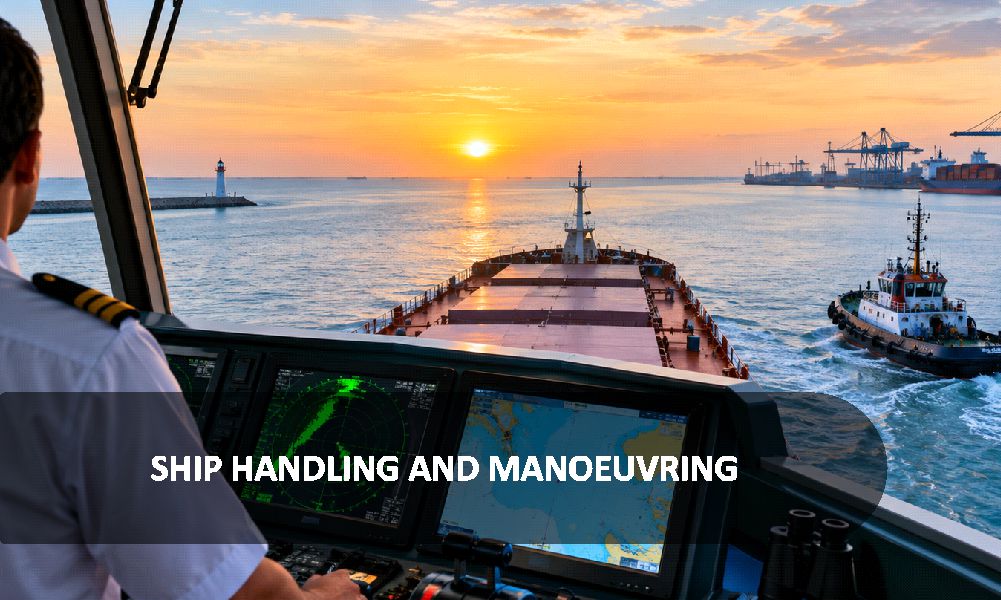
AIMS:
To give students a sound understanding of the forces that govern a ship’s movement, together with the knowledge and judgement to handle a ship safely in routine, harbour and emergency situations.
OBJECTIVES:
- Explain ship motion, the forces acting on a ship, and the handling effects of propellers, rudders and thrusters.
- Describe turning and stopping behaviour and the effects of wind, current, shallow water and interaction.
- Explain the standard manoeuvres, including anchoring, berthing, unberthing, mooring and tug operations.
- Describe ship handling in heavy weather and in emergencies, including man overboard recovery.
COURSE CONTENT:
- Fundamentals of Ship Handling
- Propellers and Propulsion Systems
- Rudders, Steering and Lateral Thrusters
- Pivot Point and Turning Characteristics
- Manoeuvring Standards and Ship Information
- Speed Control and Stopping
- Effects of Wind and Current
- Shallow Water, Squat and Confined Waters
- Hydrodynamic Interaction
- Types of Manoeuvres
- Anchoring and Anchor Work
- Berthing Manoeuvres
- Unberthing Manoeuvres
- Types of Mooring, Mooring Lines and Mooring Safety
- Tug Assistance and Towage
- Ship Handling in Heavy Weather
- Emergency Manoeuvres I: Machinery and Steering
- Emergency Manoeuvres II: Casualties
- Search, Rescue and Man Overboard
- Handling Large and Special Ships
- Master-Pilot Exchange and Bridge Teamwork
Modules: 21
Skill Level: Advanced
Course Duration: 2 Days
