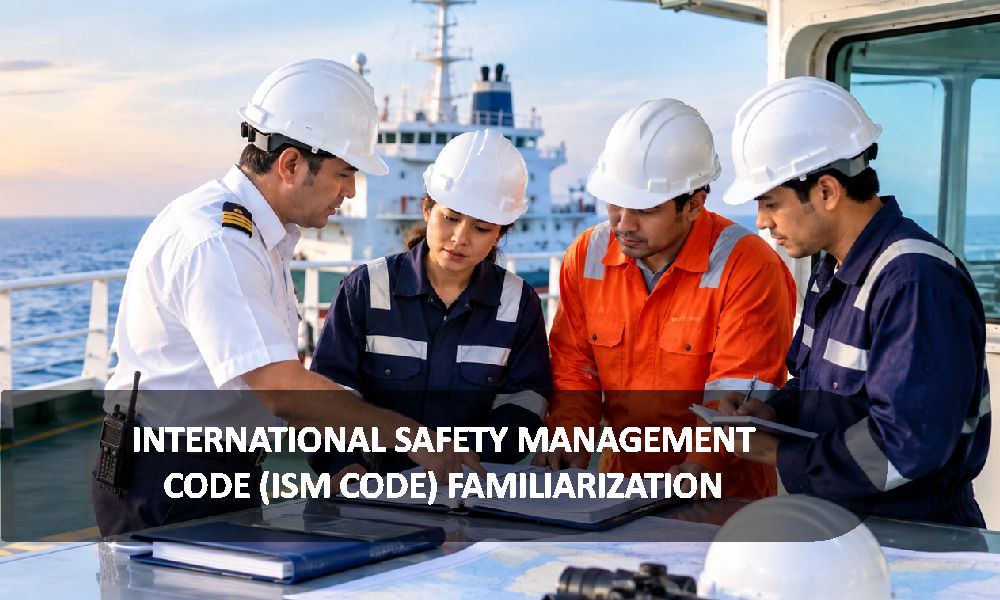
INTERNATIONAL SAFETY MANAGEMENT CODE (ISM CODE) FAMILIARIZATION

0 Students Enrolled
Price
0 Students Enrolled
Modules 12
Skill Level Beginner
Language English ‎(en)‎

Course Overview

AIMS:

To equip students with a comprehensive understanding of the International Safety Management (ISM) Code, its regulatory framework, and its practical application in developing, implementing, and auditing Safety Management Systems (SMS) aboard ships and within shipping companies, to promote a strong safety culture and prevent pollution and loss of life at sea.

OBJECTIVES:

By the end of this course, students should be able to:

  • Understand the historical background, purpose, and legal status of the ISM Code under SOLAS Chapter IX.
  • Explain the structure and content of the ISM Code (all 16 elements/sections).
  • Identify the roles and responsibilities of the Company, Designated Person Ashore (DPA), Master, and ship's crew under the Code.
  • Describe the process of developing and documenting a Safety Management System (SMS).
  • Explain certification requirements — Document of Compliance (DOC) and Safety Management Certificate (SMC).
  • Analyse procedures for reporting non-conformities, accidents, and hazardous occurrences.
  • Evaluate the audit process (internal, external, initial, intermediate, renewal) and the role of Flag State/Recognized Organizations (ROs).
  • Apply principles of continuous improvement and corrective/preventive action within an SMS.
  • Critically assess case studies of ISM Code failures (e.g., Herald of Free Enterprise) and their influence on the Code's development.

COURSE CONTENT:

  1. Introduction to Maritime Safety Regulation
  2. Structure and Principles of the ISM Code
  3. Safety and Environmental Protection Policy
  4. Company Responsibilities and the DPA
  5. Resources and Personnel
  6. Shipboard Operations and Emergency Preparedness
  7. Reporting, Analysis, and Non-Conformities
  8. Maintenance of the Ship and Equipment
  9. Documentation Control
  10. Certification, Verification, and Audit
  11. Continuous Improvement and Safety Culture
  12. Case Studies and Applied Project

Course Content

Instructors

Loading...

Enrolment options

AIMS:

To equip students with a comprehensive understanding of the International Safety Management (ISM) Code, its regulatory framework, and its practical application in developing, implementing, and auditing Safety Management Systems (SMS) aboard ships and within shipping companies, to promote a strong safety culture and prevent pollution and loss of life at sea.

OBJECTIVES:

By the end of this course, students should be able to:

  • Understand the historical background, purpose, and legal status of the ISM Code under SOLAS Chapter IX.
  • Explain the structure and content of the ISM Code (all 16 elements/sections).
  • Identify the roles and responsibilities of the Company, Designated Person Ashore (DPA), Master, and ship's crew under the Code.
  • Describe the process of developing and documenting a Safety Management System (SMS).
  • Explain certification requirements — Document of Compliance (DOC) and Safety Management Certificate (SMC).
  • Analyse procedures for reporting non-conformities, accidents, and hazardous occurrences.
  • Evaluate the audit process (internal, external, initial, intermediate, renewal) and the role of Flag State/Recognized Organizations (ROs).
  • Apply principles of continuous improvement and corrective/preventive action within an SMS.
  • Critically assess case studies of ISM Code failures (e.g., Herald of Free Enterprise) and their influence on the Code's development.

COURSE CONTENT:

  1. Introduction to Maritime Safety Regulation
  2. Structure and Principles of the ISM Code
  3. Safety and Environmental Protection Policy
  4. Company Responsibilities and the DPA
  5. Resources and Personnel
  6. Shipboard Operations and Emergency Preparedness
  7. Reporting, Analysis, and Non-Conformities
  8. Maintenance of the Ship and Equipment
  9. Documentation Control
  10. Certification, Verification, and Audit
  11. Continuous Improvement and Safety Culture
  12. Case Studies and Applied Project

Modules: 12
Skill Level: Beginner
Course Duration: 1 Day
Guests cannot access this course. Please log in.

Related Courses

Maritime Safety

AIMS:To equip ship safety officers with the knowledge and skills necessary to pr...

5 lessons

AIMSThe Risk Assessment and Risk Management (RARM) course is designed to provide...

5 lessons

AIMS:To provide participants with the knowledge and skills necessary to operate,...

5 lessons

AIMS: The course is based on "Code of safe working practices for merchant seafar...

5 lessons

Latest Courses

AIMS: The course is based on "Code of safe working practices for merchant seafar...

5 lessons

AIMS:To provide participants with the knowledge and skills necessary to operate,...

5 lessons

AIMS:To provide newly joining and existing ship's cooks, galley assistants, and ...

5 lessons

This course equips seafarers with the essential knowle...

0
(0)
5 lessons

AIMSThe Risk Assessment and Risk Management (RARM) course is designed to provide...

5 lessons
Maritime Safety

AIMS:To equip ship safety officers with the knowledge and skills necessary to pr...

5 lessons
Marine Engineering Skill Development Courses

AIMS:The Tanker Vetting Training Course aims to provide seafarers with a compreh...

5 lessons
Marine Engineering Skill Development Courses

AIMS:To provide participants with the knowledge and practical understanding requ...

5 lessons
Marine Engineering Skill Development Courses

AIMS: To equip engine room watchkeepers and team members with essential leaders...

5 lessons

AIMS:This course equips navigating officers with the essential skills for effect...

5 lessons

AIMS: This course equips navigating officers with the essential skills for effec...

5 lessons

AIMS: This course aims to provide trainees with the essential knowledge, practi...

5 lessons
loader image